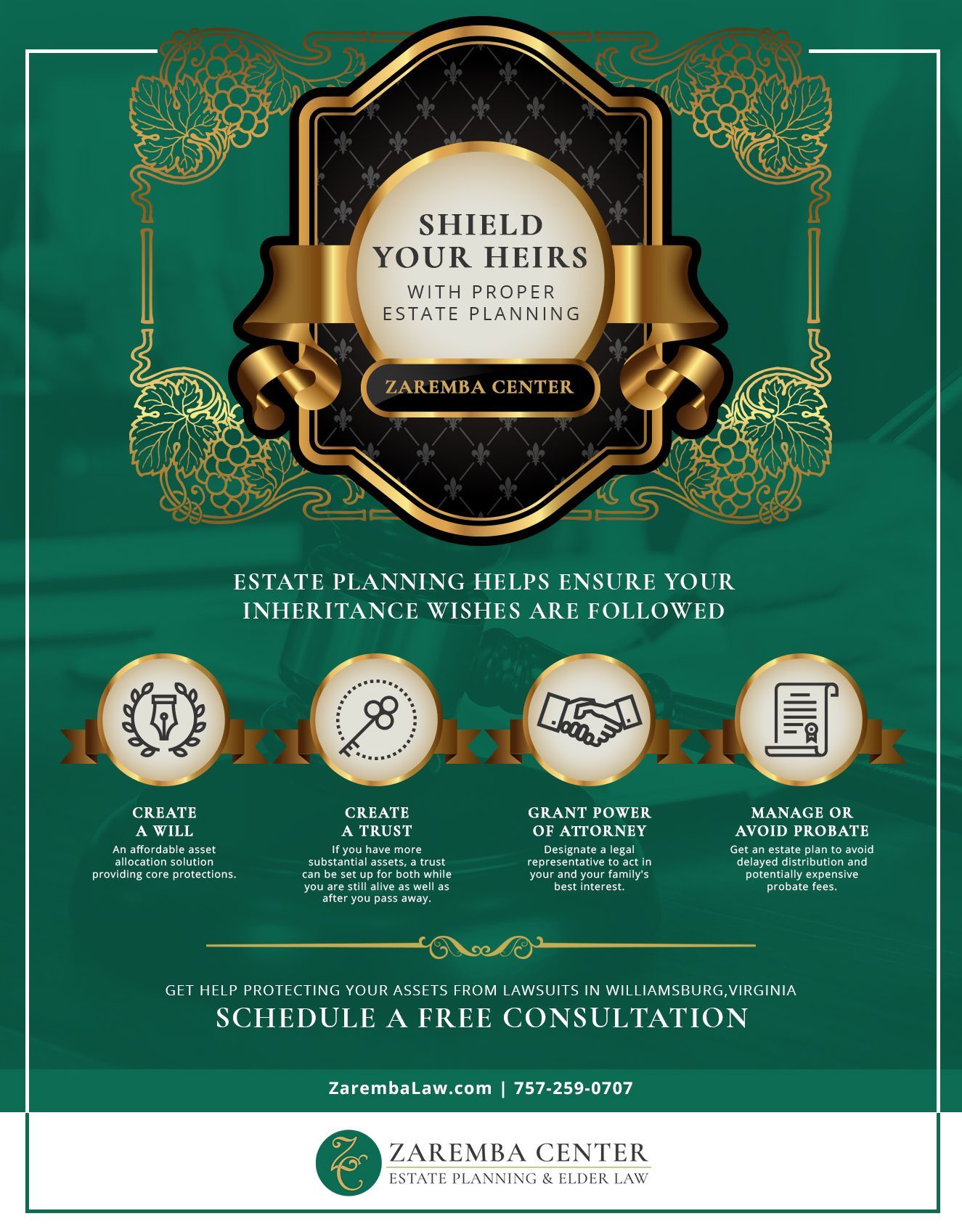
There are many steps you can take to protect your assets through intelligent estate planning. However, due to the variation in laws between states, the complex legal strategies involved in it, and other factors, it’s best to work with an experienced estate law attorney to ensure that your assets are properly managed.
Work With Walt Zaremba
The simplest and least expensive starting point for an estate plan is a will. Wills are a legally enforceable document that conveys your intentions for how your assets are to be distributed at the time of your death. You can spell out precisely how much and what goes to who and how. Even more, a will can be used to specify who you don’t want to inherit assets from you upon your death. An estate plan gives your family a roadmap for what to do with your financial assets when you pass away.
If you have more substantial assets, it may be beneficial to set up a trust to protect your assets while you are still alive as well as after you pass away. There are a variety of different trust options you can implement, which vary from state to state. The two main ones to know about, however, are living trusts and testamentary.
- Living Trust — Provides legal protection for your assets while you are still alive. They can be either revocable or irrevocable.
- Testamentary
— Testamentary trusts are created upon your death and based upon the instruction you laid out in your last will and testament. This is a type of irrevocable trust.
Want to learn more about your options for securing your assets and ensuring the inheritance process goes according to your wishes?
Schedule A Free Consultation